What is B-Roll? Understanding Video Production’s Most Important Footage
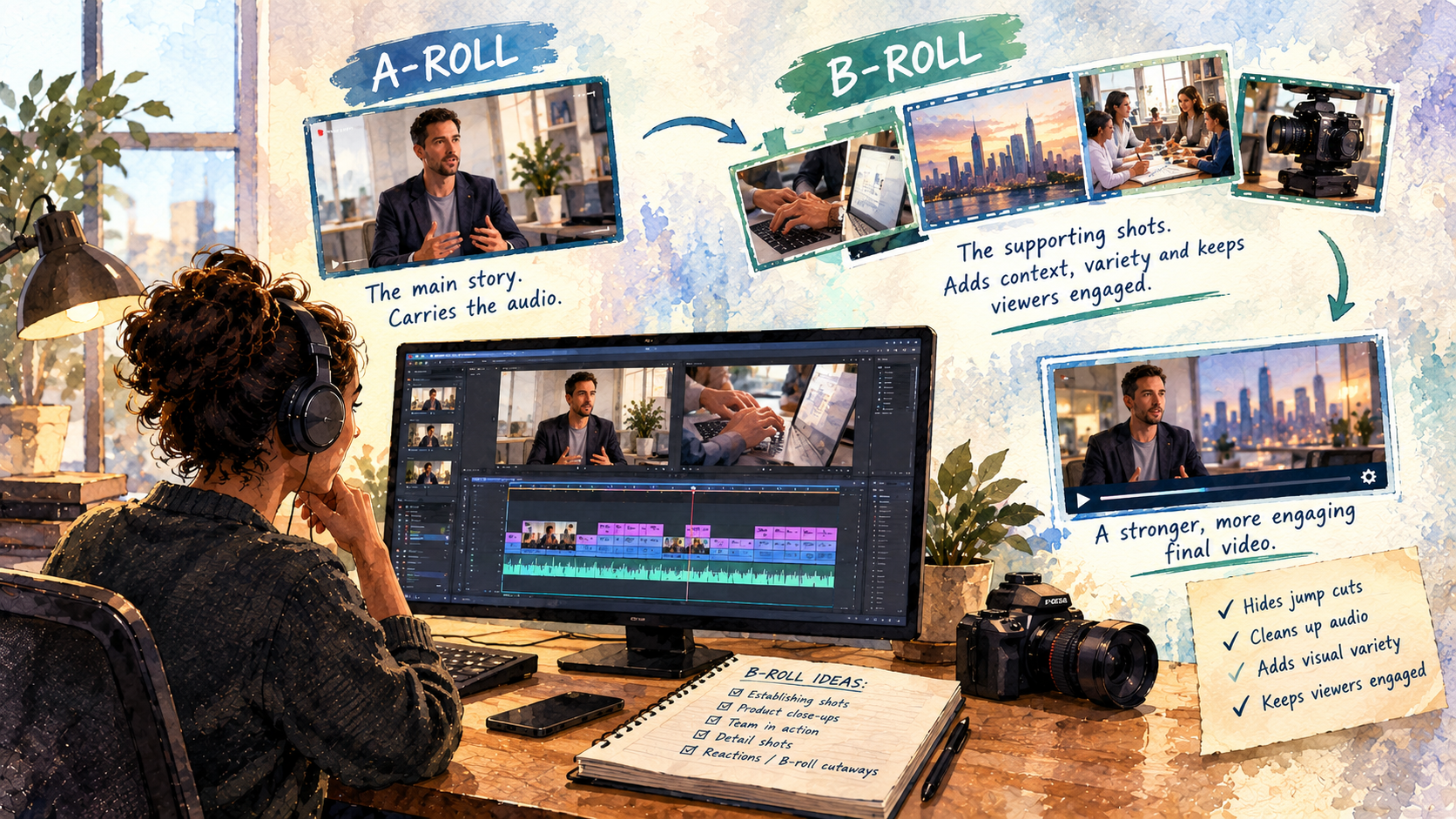
B-roll footage is the secondary video footage cut over your main footage to add context, illustrate a point, and keep viewers engaged. While your primary footage (the A-roll) carries the narrative—like an interview or a presenter speaking—the B-roll represents the shots a video cuts to while the main audio continues playing.
If you have ever watched an engaging corporate video, a compelling documentary, or a polished product tutorial, you have seen B-roll in action. You might see a CEO explaining a new initiative on camera, but then the video seamlessly cuts to footage of the team working in the office, hands sketching a design, or a close-up of the new product, all while the CEO’s voice continues uninterrupted. Those supplementary clips are B-roll.
For business owners, content creators, and marketing professionals planning a shoot, understanding B-roll meaning and mechanics is essential. Underneath the definition lies a highly practical question: does your project actually need this extra footage, and is capturing it worth the effort?
The short answer is yes. Strategic, high-quality B-roll is one of the most significant factors separating amateur video from professional, broadcast-quality production.
A-Roll vs. B-Roll: Understanding the Difference
To fully understand what B-roll is, you have to understand what it supports. Every video production generally divides captured footage into two distinct categories: A-roll and B-roll.
A-roll is the primary audio and video that drives your narrative forward. This is the main action. If you are recording a talking-head interview, a news broadcast, or a scripted monologue, that main camera angle focused on the speaker is your A-roll.
B-roll is the supplemental footage that illustrates and enhances that primary story. It never drives the narrative on its own; instead, it provides visual evidence, emotional context, and necessary pacing.
Quick Comparison: A-Roll vs. B-Roll
Feature A-Roll (Primary Footage) B-Roll (Supplemental Footage) Primary Function Drives the story and delivers the core message. Illustrates the story, hides edits, and adds visual variety. Audio Carries the main audio track (dialogue, interview, voiceover). Usually relies on A-roll audio or uses ambient background sound. Examples On-camera interviews, a presenter speaking, the main action of a scene. Establishing shots, product close-ups, reaction shots, process footage. Editing Role Forms the foundational timeline of the video. Cut in over the timeline to cover gaps and keep the viewer engaged. There is a vital nuance here that many novice filmmakers miss: a single clip’s status as A-roll or B-roll depends entirely on its job in the edit. A shot of a person demonstrating a software dashboard is A-roll if the entire video is a silent, on-screen software tutorial. However, if that same software demonstration is placed over an interview of the founder explaining the software’s benefits, that demonstration footage instantly becomes B-roll. The categorization relies on how the footage functions within the final cut, not necessarily what is happening inside the frame.
Why is it Called B-Roll? The 16mm Film Origin
The term “B-roll” often sounds like an obscure piece of entertainment industry jargon, but its origin is highly practical. The name dates back to the era of early 16mm film editing, long before digital editing software existed.
When editors worked with physical film, cutting an interview meant physically slicing the film and taping it back together. Because the film strip carried both the picture and the sound, cutting out a boring section of dialogue meant leaving a visible, jarring jump in the visual footage. To hide these physical splices, editors ran two separate rolls of film side by side: Reel A for the main footage, and Reel B for extra, supplemental shots.
When a physical cut happened on Reel A, the editor would transition the viewer’s eye to a shot from Reel B. The physical reels are long gone, replaced by digital timelines on computer screens, but the name stuck. Today, B-roll serves the exact same fundamental purpose: making edits invisible and making stories better.
Why is B-Roll Important? The Hidden Work It Does
Capturing extra footage requires time, planning, and resources. So why is B-roll important enough to warrant its own dedicated time during your production schedule? Supplemental footage earns its keep by doing real, heavy-lifting work in the editing room.
Hiding Jump Cuts and Cleaning Up Audio
A jump cut is a jarring, abrupt transition between two shots of the exact same subject from the exact same angle. If you film a ten-minute interview and edit it down to a tight, punchy two minutes, you will inevitably have to chop out pauses, “ums,” “ahhs,” and long-winded tangents.
If you only have one camera angle (your A-roll), every time you remove a word, the speaker will visibly “jump” on screen. It looks amateurish and distracts the viewer. By cutting to B-roll footage right as the edit happens, the editor can smoothly piece together different parts of the interview. The viewer hears a seamless, articulate sentence, while their eyes are engaged by the supplemental footage, completely unaware that an edit took place.
Adding Visual Variety and Pacing
The human eye craves movement and variety. Even if an interview subject is incredibly dynamic, watching a single, unbroken shot of a person speaking for three minutes can cause a viewer’s attention to drift. B-roll solves this by changing the visual pacing. Cutting to interesting, relevant supplemental footage breaks up the visual monotony, resets the viewer’s attention span, and keeps them engaged with the content all the way to the call to action.
Showing Instead of Telling
Great video production follows the age-old storytelling rule: show, don’t just tell. If a business owner is on camera talking about the meticulous care their team takes when packaging a product, that statement is fine. But if the video cuts to a beautiful, slow-motion B-roll shot of an employee carefully wrapping that product, the statement becomes undeniable proof. B-roll illustrates the narration, making abstract concepts concrete and turning simple claims into compelling visual evidence.
Signaling Professionalism
High-quality B-roll is a recognized trust signal. Audiences today are highly media literate. They intuitively understand the difference between a hastily recorded smartphone video and a crafted, intentional piece of media. When you invest in capturing varied, well-lit, and purposeful B-roll, you immediately signal to your audience that your brand is professional, capable, and credible.
The Essential B-Roll Shot List: What You Need to Capture
To make your videos more engaging, polished, and clear, you must step on set with a plan. Here is a practical B-roll shot list that covers the foundational elements every editor needs to craft a compelling story.
Establishing Shots An establishing shot is typically a wide view that shows the viewer exactly where the scene is taking place. If you are filming a corporate video inside an office, an establishing shot might be an exterior view of the building, the company sign, or a wide, sweeping view of the main lobby. It grounds the audience in the physical space before the main interview begins.
Cutaways A cutaway is exactly what it sounds like: a shot that cuts away from the main action to show something else entirely, often a specific detail or an environment that provides atmosphere. If the A-roll is a chef talking in a kitchen, a cutaway might be a shot of the fresh ingredients on the counter.
Detail and Product Close-Ups These are tightly framed shots focusing on texture, features, and specific elements. If you are marketing a physical item, you need deliberate close-ups of the product in action. During Commercial Shoots, this type of B-roll is absolutely critical, as it highlights the specific selling points the voiceover is describing.
Process Footage People love to see how things are made or how a service is delivered. Process footage captures a task from start to finish. This might involve an artist painting a canvas, an engineer coding at a desk, or a team actively collaborating around a whiteboard. Process B-roll is highly engaging because it implies forward momentum.
Reaction Shots Video is an emotional medium. Reaction shots capture people listening, nodding, smiling, or reacting to the main action. In an interview setting, this might be a shot of the interviewer thoughtfully listening to the guest. It helps build human connection and tells the viewer how they should be feeling in that moment.
How to Plan and Execute B-Roll on Set
The reality of video production is that excellent B-roll has to happen in two distinct places. First, you have to shoot enough of it on set, framed well and lit beautifully. Second, you have to use it purposefully in the edit. These are exactly the two areas where standard DIY videos tend to fall down. People either forget to shoot enough extra footage, or they capture it but lack the post-production experience to weave it seamlessly into the story.
To prevent this, editors generally want plenty of options. The golden rule of video production is that it is always better to over-shoot B-roll than to come up short in the edit room. A good rule of thumb is to shoot at least four times as much B-roll as you think you will actually use.
Handling both the capture and the cut is exactly what a professional broadcast facility does by default. At Drake Media Studios, we believe that bringing a vision to life requires the right infrastructure. Having an idea is the first step; having the gear, the space, and the experienced team to execute it makes that idea real.
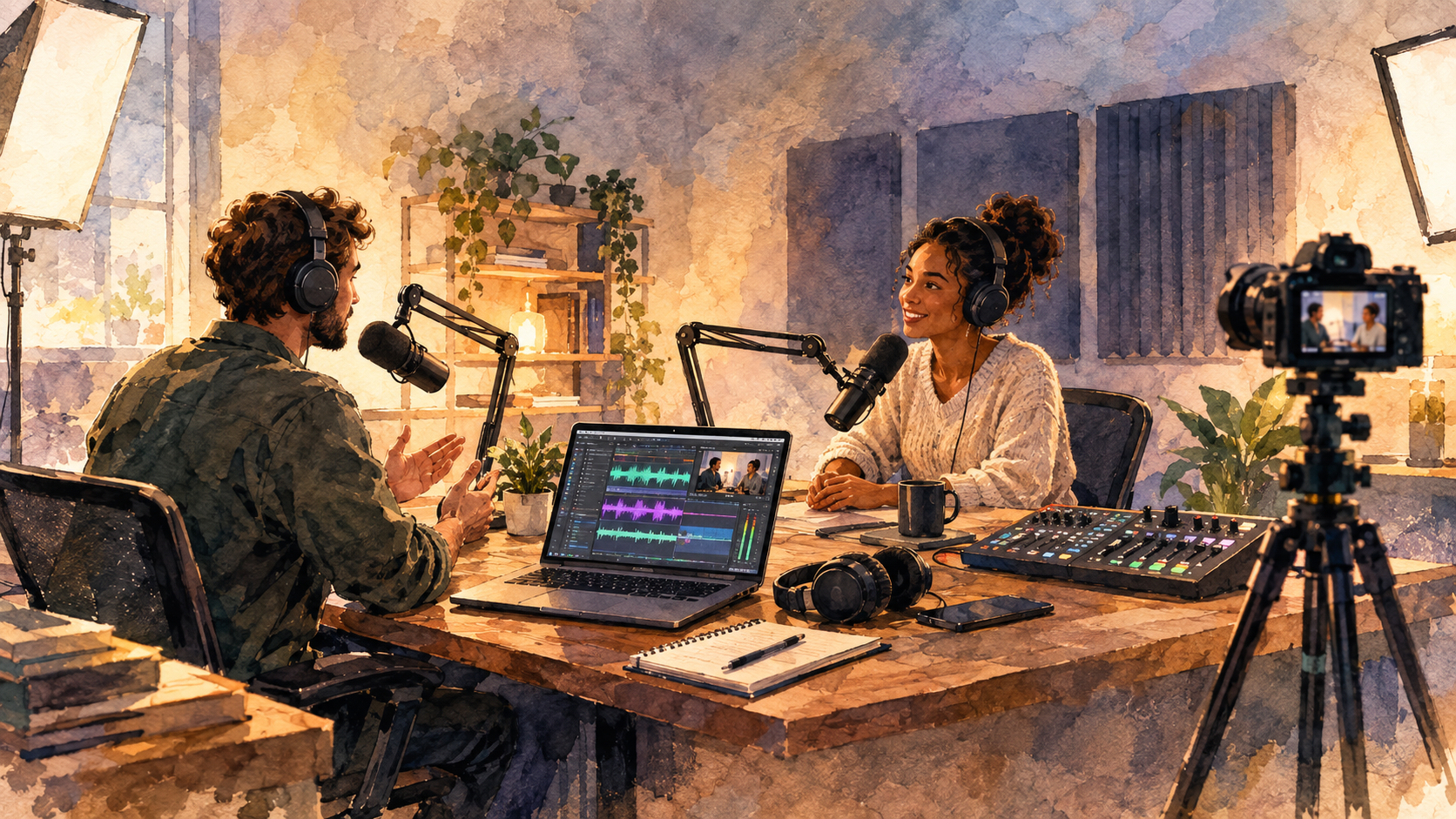
Our facility within the NYC 30-mile zone is a working broadcast hub, not just an empty rental space. The same 8,200-square-foot studio where our Telly Award-winning team produces The Donna Drake Show is available to you. Whether you are planning extensive Film & TV Production that requires multiple sets for dynamic cutaways, or you need access to state-of-the-art Editing & Post-Production suites to seamlessly blend your A-roll and B-roll together, our facility is fully staffed and ready.
Creating compelling content means moving past the basics. By utilizing professional spaces like The Studio, you gain access to 17 years of broadcast experience. We ensure that when the cameras roll—whether A or B—every single frame serves your ultimate goal.
Frequently Asked Questions
Q: What is B-roll? A: B-roll is secondary footage that is cut in over a video’s main footage (the A-roll) to add context and visual interest. It includes the shots a video cuts to—like close-ups, establishing shots, and process footage—while the main audio keeps playing.
Q: What’s the difference between A-roll and B-roll? A: A-roll is the primary footage that carries the story, such as an interview, a presenter, or the main action. B-roll is the supporting footage that illustrates and enhances it. A-roll drives the video; B-roll makes it richer, visually engaging, and easier to edit.
Q: Why is it called B-roll? A: The name comes from early 16mm film editing, when editors worked with two physical reels: Reel A for the main footage and Reel B for everything else. Reel B was used to transition smoothly and hide physical splices in the film. Digital editing replaced the physical reels, but the industry term stuck.
Q: What are some examples of B-roll? A: Common examples include establishing shots of a building or location, tight close-ups of a product’s details, footage of a team engaging in a process or task, crowd or reaction shots, and atmospheric footage. Anything that supports and illustrates the main A-roll footage qualifies.
Q: How much B-roll do I need? A: More than you think. Professional editors generally want plenty of options so they can cover cuts, hide mistakes, and keep the video visually varied. It is always better to over-shoot B-roll on set than to come up short when you reach the editing room.
Q: Do I need B-roll for short social media videos? A: Usually, yes. Even a short 30-second clip feels significantly more dynamic, polished, and professional with a few well-chosen cutaways than it does with a single, unbroken talking-head shot. Fast-paced platforms actually demand faster visual changes to hold viewer attention.