How to Find, Pitch, and Book Podcast Guests (And Make Them Look Good)
Every great podcast episode hinges on one critical element: the conversation. When you invite the right voice onto your platform, you are not just filling a thirty-minute slot on your editorial calendar. You are inviting a new perspective, expanding your show’s reach, and giving your audience a reason to keep coming back week after week. But for many hosts—whether you are just learning How to Start a Podcast or looking to elevate an established show—the process of securing those voices can feel deeply intimidating.
Under the surface, most hosts harbor three very real anxieties about the interview process. First, they worry about how to find guests for a podcast who will genuinely resonate with their listeners. Second, they stress over how to ask these experts without feeling awkward, spammy, or facing endless rejection. Finally, they worry about how to run the actual episode so the guest shines, rather than freezing up or sounding terrible on a cheap laptop microphone.
Fortunately, successful podcast guest booking does not rely on luck, and it certainly does not require you to aggressively cold-call celebrities. Great guests are usually much closer than you think, and securing them is a matter of building a simple, repeatable pipeline. Furthermore, how comfortable a guest feels—and how good they look and sound on the final recording—is almost entirely within your control.
By mastering a few foundational strategies for outreach, preparation, and production, you can turn every interview into a growth engine for your show. Here is exactly how to book podcast guests who elevate your brand, foster deep connections with your listeners, and share your content with the world.
How to Find the Right Podcast Guests
The most common mistake new hosts make is believing they need to scour the internet for strangers to interview. In reality, the richest and most reliable sources for great guests are already sitting within your existing ecosystem. Warm introductions and strategic community sourcing will always convert far better than cold outreach.
Start With Your Immediate Sphere
Your past guests, your dedicated listeners, and your own professional network are the perfect starting points for your guest pipeline. If you have already interviewed someone who brought great energy and insight to your show, that person is highly likely to know other thought leaders in the exact same niche.
Your listeners are equally valuable resources. Pay attention to the questions they ask, the comments they leave on your social media, and the other creators they engage with. If your community is already following a specific expert, reaching out to that expert with a message that says, “Our community constantly shares your work, and they would love to hear from you directly,” provides an incredibly compelling hook.
Ask the Golden Question
The single most effective strategy for finding podcast guests is to build a referral engine directly into your interview workflow. At the end of every recording session, or in your post-interview follow-up email, simply ask your guest: “Who is the most interesting person you know on this topic?”
When they give you a name, follow up by asking if they would be willing to make a brief email introduction. A warm introduction from a trusted colleague dramatically increases the likelihood that a potential guest will say yes. It bypasses the gatekeepers, establishes immediate credibility, and transforms cold podcast guest outreach into a friendly, peer-to-peer invitation.
Look for Experts in a Press Window
People are infinitely more likely to say yes to a podcast appearance when they actively need to promote something. Keep a running list of authors who are releasing books in your industry, founders who have just launched new companies, or researchers who have recently published significant studies. These individuals are in a “press window,” meaning they are actively seeking platforms to share their message.
By targeting potential guests who have a vested interest in reaching your audience right now, you align your show’s need for great content with their need for visibility. It becomes a mutually beneficial arrangement where everybody wins.
The Pitch: How to Reach Out Without Feeling Awkward
Once you have identified a list of potential guests, the next step is reaching out. This is where many hosts freeze up, worrying that they are being a nuisance. However, podcast guest outreach is simply an invitation to collaborate. The key to a successful pitch is keeping it short, making it clearly about them, and demonstrating exactly what they will gain from the experience.
A high-converting pitch avoids generic, mass-produced templates that feel like spam. Instead, it relies on a specific four-part structure: a personal hook, why they are a fit right now, what is in it for them, and one clear ask.
The Anatomy of a Successful Pitch
- The Personal Hook Start by proving you actually know who they are. Reference a specific article they wrote, a recent project they launched, or a unique viewpoint they shared online. This shows you have done your homework and aren’t just blasting the same email to a hundred people.
- Why Them, Why Now Clearly state why their specific expertise is relevant to your audience at this exact moment. If they just released a book, mention it. If your industry is facing a specific challenge that they have solved, highlight that connection.
- What’s in It for Them (The Promotion Plan) This is often what tips a “maybe” into a “yes.” Outline the value of your platform. You don’t need a million downloads to offer value; you just need a dedicated, engaged audience. More importantly, tell them how you plan to promote the episode. Let them know you will provide them with polished clips, a written summary, and dedicated social media promotion.
- One Clear Ask End with a low-friction question. Do not ask them to “click this link to find a time on my calendar” in the very first email. Instead, simply gauge their interest.
The Podcast Guest Pitch Template
Here is a reusable outreach structure you can adapt for your own show:
Subject: Loved your recent piece on [Topic] / Podcast Interview?
Hi [Name],
I loved your recent [article/book/post] about [Specific Detail]. Your point about [Specific Insight] really resonated with me, and it’s a conversation I know my audience is eager to explore.
I host [Podcast Name], a show dedicated to [Brief 1-Sentence Description of Audience/Niche]. We would be honored to have you on as a guest to discuss your work on [Topic] and share your upcoming [Project/Book] with our community.
We make the process incredibly easy on our end. We handle all the technical prep, keep the interview to just [Time] minutes, and provide you with ready-to-post video clips and a written summary to share with your own audience afterward.
Are you open to exploring a guest appearance in the coming weeks? If so, I’d be happy to send over a few dates.
Best, [Your Name]
Removing Friction and Prepping the Guest
Getting a “yes” is only the beginning of podcast guest booking. Once they agree, your job shifts to removing all friction from the process and ensuring they feel completely supported before you ever hit record. A nervous guest gives a worse interview, and how comfortable they feel is almost entirely within your control as the host.
Streamline the Booking Process
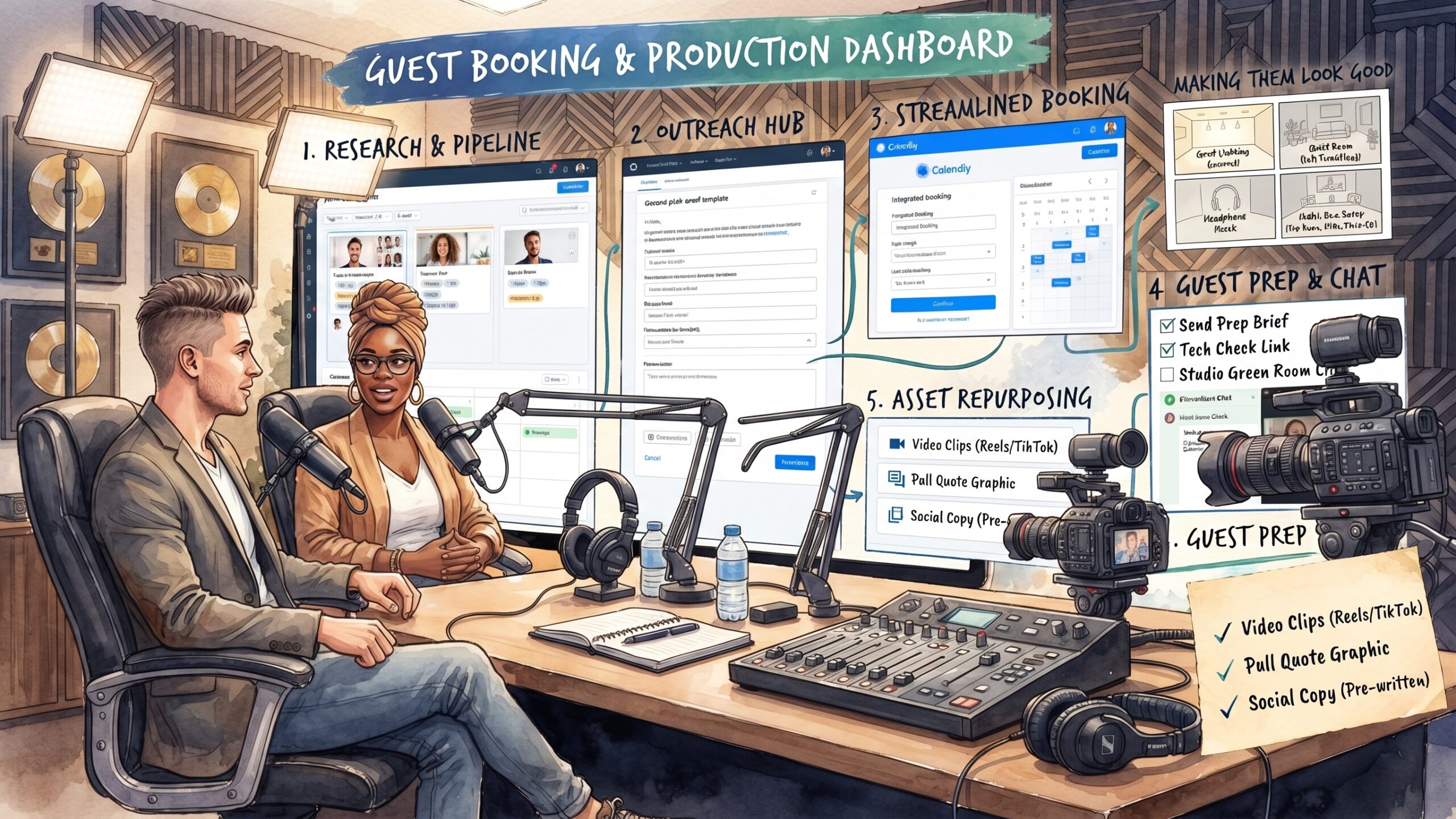
The moment they agree to come on the show, send a single scheduling link (using a tool like Calendly or Acuity) that captures everything you need at once. Your booking form should collect their brief bio, headshot, social media handles, and any specific links they want to promote. Gathering this upfront prevents the endless back-and-forth emails that can frustrate busy guests.
The 24-Hour Prep Brief
About a day before your scheduled recording, send a short, encouraging prep brief. This is not a rigid script, but rather a comforting roadmap that lets them know exactly what to expect.
The Guest Prep Packet Checklist:
- The Core Topics: 3 to 4 bullet points outlining the general themes you plan to discuss.
- The Story Nudge: A gentle prompt asking them to think of a specific story or real-world example they can share regarding the topic. Stories make for the most compelling audio.
- The Tech Reminders: Simple, clear instructions for their environment. Remind them to use headphones (to prevent audio bleed), find a quiet room with soft furnishings, and test their microphone.
- Wardrobe and Lighting: If you are recording video, include a brief note suggesting they face a natural light source (like a window) and wear colors that contrast with their background.
Making Them Comfortable on the Day
When the guest logs in or arrives at the studio, do not immediately hit record. Spend the first five to ten minutes connecting as humans. Chat about their day, review the general flow of the interview, and most importantly, remind them that the episode can be edited. Knowing there is a safety net—that they can pause, take a sip of water, or restart a sentence if they stumble—instantly lowers their heart rate and results in a far more authentic, relaxed conversation.
Making Them Look and Sound Good (The Growth Engine)
Here is a foundational truth of podcasting: framing your strategy around “making the guest look good” is not just about good manners—it is a highly effective growth strategy.
When a guest finishes an interview, they are deciding whether or not they will share the final product with their own network. People share things that make them look authoritative, intelligent, and polished. If you stick a guest with a dim, pixelated webcam feed and a distracting, echoey room tone, they will quietly bury the episode. If, however, they look and sound like a true industry expert, they will broadcast that episode to their entire audience. Turning one guest’s audience into your own audience is how shows achieve exponential growth.
The Technical Reality of Great Interviews
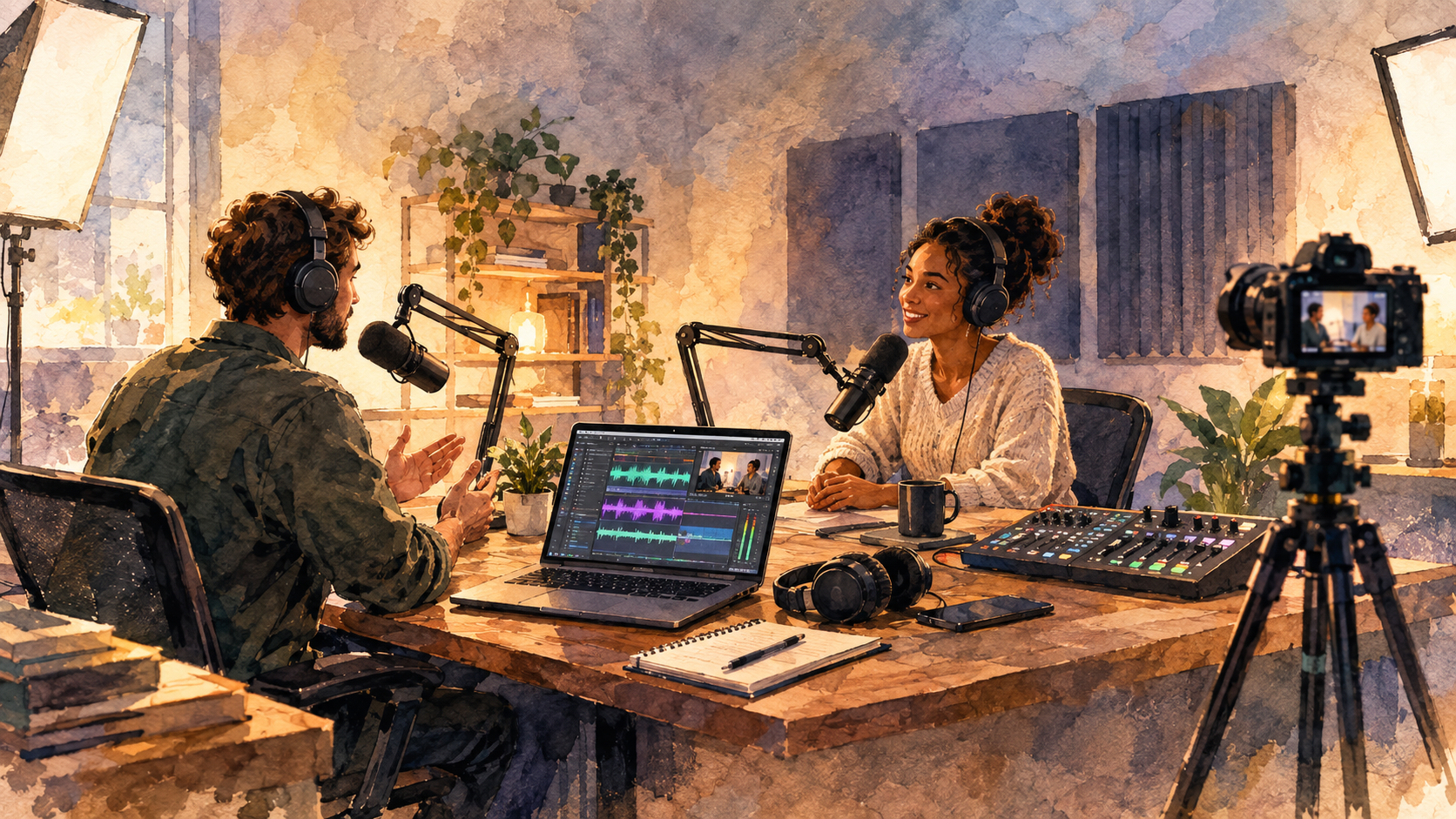
To guarantee your guests look and sound broadcast-quality, you have to move beyond the limitations of standard video conferencing software. In today’s media landscape, video gives your episode far more reach than audio alone, but only if the setup is executed correctly. Good lighting, clean audio, and multiple camera angles transform a standard interview into a premium viewing experience.
This is where investing in professional infrastructure changes the trajectory of your show. For creators, agencies, and business owners in the New York metro area, The Studio at Drake Media provides the ultimate solution to the “look and sound good” mandate.
Drake Media Studios is a working broadcast facility—not just a rented room with a ring light. The exact same 8,200-square-foot facility where The Donna Drake Show is produced is available to you, fully staffed and ready to roll. When you bring a guest into a professional environment for Podcast & Vodcasting, you instantly elevate your brand’s credibility.
You remove the single biggest risk of remote recording: a guest whose bad home-office acoustics or poor internet connection sinks the episode. Instead, they are treated to proper sound stages, professional lighting grids, broadcast-quality microphones, and a team that knows exactly what great production looks like.
If you are weighing the benefits of audio-only formats versus multi-camera video setups, understanding the nuances of Podcast vs. Vodcast production will help you see why high-quality video is the standard for modern audience growth. Putting your guest in a premium studio environment makes them feel valued, ensures a pristine final product, and guarantees they will be proud to share the work.
The Post-Interview Repurposing Strategy
The way you follow up after the interview is just as critical as how you pitched them in the first place. When the episode goes live, do not simply send a link and ask them to share it. You have to do the heavy lifting for them.
Create an asset package that includes ready-to-post, short-form video clips (formatted for platforms like Instagram Reels, TikTok, and LinkedIn) featuring their most insightful moments from the interview. Pair these clips with a written summary of the episode, a pull-quote graphic, and pre-written social media copy they can easily copy and paste.
By handing them a polished, professional media kit, you make it effortless for them to promote the show. If you are leveraging professional production, exploring robust Media Distribution strategies ensures those clips maintain their high fidelity across every platform. This comprehensive follow-up is the final step in turning a single guest booking into an engine that drives new listeners to your show, builds your authority, and makes your next guest outreach that much easier.
Frequently Asked Questions
How do I find guests for my podcast? Start with the people closest to your show—past guests, dedicated listeners, and your own professional network. Additionally, look for experts your audience already follows and authors who are currently on a press tour. The most effective strategy is to ask every guest you interview who else you should talk to; warm introductions consistently convert far better than cold outreach.
How do I ask someone to be on my podcast? Keep your pitch short and entirely focused on them. Include a personal hook that proves you know their work, explain why they are a perfect fit right now, and highlight what is in it for them (especially how you will promote their episode). End with one clear, low-pressure ask, and avoid anything that reads like a mass-produced template.
What should I send a podcast guest before recording? Send a short prep brief about a day ahead of the interview. Include the core topics you will cover, a gentle nudge to come prepared with a story or two, and simple tech reminders (such as wearing headphones, finding a quiet room, and testing their mic). For video interviews, add quick wardrobe and lighting tips so they feel confident on camera.
How far ahead should I book podcast guests? Treat your booking process as an ongoing pipeline rather than a last-minute scramble. Keep a running list of target guests and maintain conversations in progress so you consistently have interviews lined up at least three to four weeks in advance. This buffer gives you time to properly prep and prevents you from rushing to fill an empty slot.
How do I make a nervous guest comfortable? Prep them thoroughly ahead of time, keep the technology requirements as simple as possible, and spend time chatting casually before you ever hit record. Most importantly, let them know the episode can be edited and that they can restart a thought if needed. A relaxed guest gives a much better interview, and creating that comfort is mostly in your hands.
Should podcast guests be on video? Yes. In today’s digital landscape, video gives your episode significantly more reach across social media algorithms, and it provides an incredible opportunity to make your guests look great. Just ensure the setup is professional—with good lighting, multiple camera angles, and pristine audio—so the video actively elevates the episode rather than detracting from it.