Podcast vs. Vodcast: Which Format is Right for Your Next Show?
If you are planning to launch a new show or expand an existing one, you have likely been told that you “need video.” In today’s saturated media landscape, creators, business owners, and brand marketers are constantly weighing the formats that will yield the highest return on their time and investment. You may be wondering if the push toward video is just industry hype, or if it represents a fundamental shift in how audiences consume conversational media. More importantly, you need to know if the transition to video requires a prohibitive amount of specialized equipment, studio space, and technical expertise.
To make an informed decision, you first need to understand the terminology.
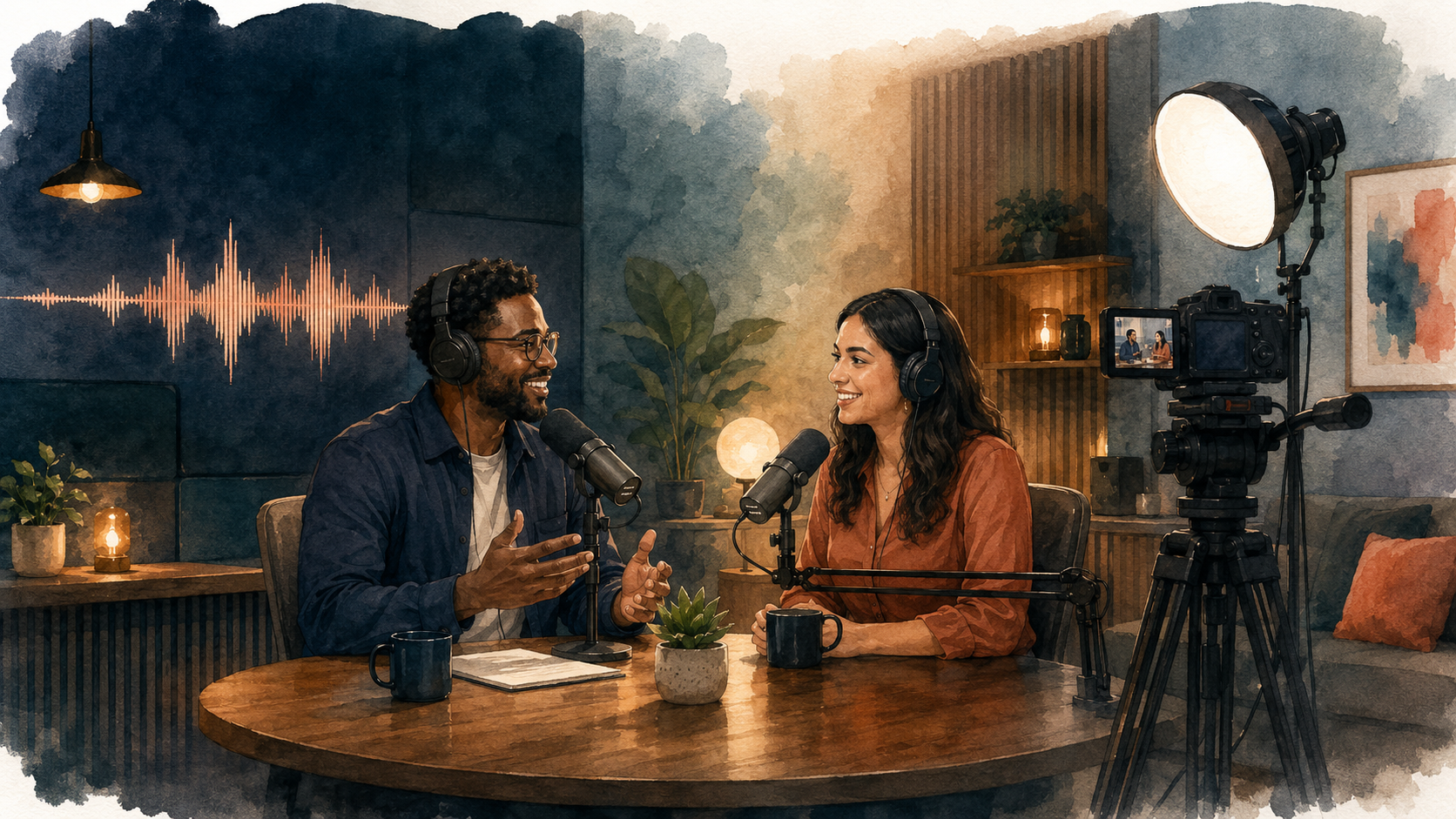
What is a vodcast? A vodcast—short for video podcast—is simply a podcast that is recorded and published as a video, allowing your audience to watch the conversation as well as listen to it. While traditional podcasts deliver audio files through platforms like Apple and Spotify, a vodcast includes the visual recording of the hosts and guests, combining the rich, long-form storytelling of a podcast with the engaging on-screen presence of a television interview.
Understanding the difference between an audio podcast and a video podcast is only the first step. Choosing the best format for your goals requires a clear look at audience behavior, production realities, and the strategic advantages of each medium.
The Data: Why Video Podcasting is Taking Over
The instinct to look into video podcasting is backed up by undeniable shifts in consumer behavior. Audiences are fundamentally changing how they discover and engage with content, and the major platforms have restructured their algorithms and capabilities to meet this demand. The rise of the vodcast is not anecdotal; it is a documented evolution in digital media.
Recent data paints a clear picture of this transition. Over half of all Americans have watched a video podcast at least once, and approximately 26% watch one in a typical week. The format has become so integrated into daily media diets that roughly 41% of listeners now explicitly say they prefer video podcasts over audio-only alternatives.
This shift in consumer preference has forced platforms to adapt rapidly. YouTube has firmly established itself as the most popular podcast platform in the United States, with about a third of weekly listeners naming it their primary service—placing it ahead of long-standing audio giants like Spotify and Apple.
Creators have followed the audience. Around half of all podcast shows now post full video episodes on YouTube, representing a massive jump of roughly 130% since 2022. The permanence of this shift was cemented in early 2026 when Apple Podcasts added native video support to its ecosystem. Today, every major platform—including Spotify and Apple—treats video as a core feature rather than an experimental add-on. For creators and brands, this means that visual content is no longer an alternative distribution method; it is the industry standard.
The Case for Audio Podcasts: Why the Original Format Still Thrives
Despite the overwhelming statistics favoring video, it is a mistake to declare audio podcasts obsolete. Traditional audio-only podcasts offer unique advantages that visual formats simply cannot replace, which is why millions of listeners continue to rely on them daily.
The primary advantage of the audio podcast is its integration into the listener’s daily routine. Audio is a secondary activity medium; it does not require an audience’s undivided visual attention. Listeners consume audio-based content while commuting, working out, walking the dog, or completing household chores. This hands-free, on-the-go accessibility allows creators to capture hours of an audience’s time that would otherwise be unavailable to video creators.
Furthermore, audio podcasts foster a distinct sense of intimacy. Because the sound is often delivered directly into a listener’s ears through headphones, it creates a deeply personal connection between the host and the audience. This format strips away visual distractions, allowing the audience to focus entirely on the nuance of the conversation, the quality of the storytelling, and the exchange of ideas.
From a production standpoint, audio-only podcasts present a significantly lower barrier to entry. If you are a thought leader with a compelling message but limited resources, launching an audio show requires minimal setup. It does not demand camera-ready styling, complex lighting grids, or multi-camera switching capabilities. This simplicity allows creators to focus entirely on content, booking guests, and recording from virtually anywhere.
The Case for Vodcasts: Discovery, Trust, and Repurposing
If audio wins on portability, video wins on growth, trust, and asset generation. When you record a vodcast, you are not just adding a visual component to your audio; you are unlocking entirely new avenues for audience discovery and brand building.
One of the most compelling reasons to adopt a video-first strategy is the psychological impact of seeing a speaker. Non-verbal communication—body language, eye contact, and facial expressions—adds crucial context to a conversation. When viewers can look a host or a guest in the eye, their perception of the content changes. Data shows that video viewers report trusting creators more when they can see them, with about 44% reporting high trust levels, compared to just 26% for audio-only listeners. For business owners, thought leaders, and brands, that gap in trust is a critical factor in conversion and community building.
Video also solves the podcasting industry’s greatest historical challenge: discoverability. Traditional podcast platforms function like directories; they are excellent for serving content to people who already know your show, but they are notoriously poor at helping new audiences find you organically. Video platforms, particularly YouTube, function as search engines and recommendation algorithms. A well-optimized video podcast can surface on the homepage of a user who has never heard of your brand but frequently watches content in your niche.
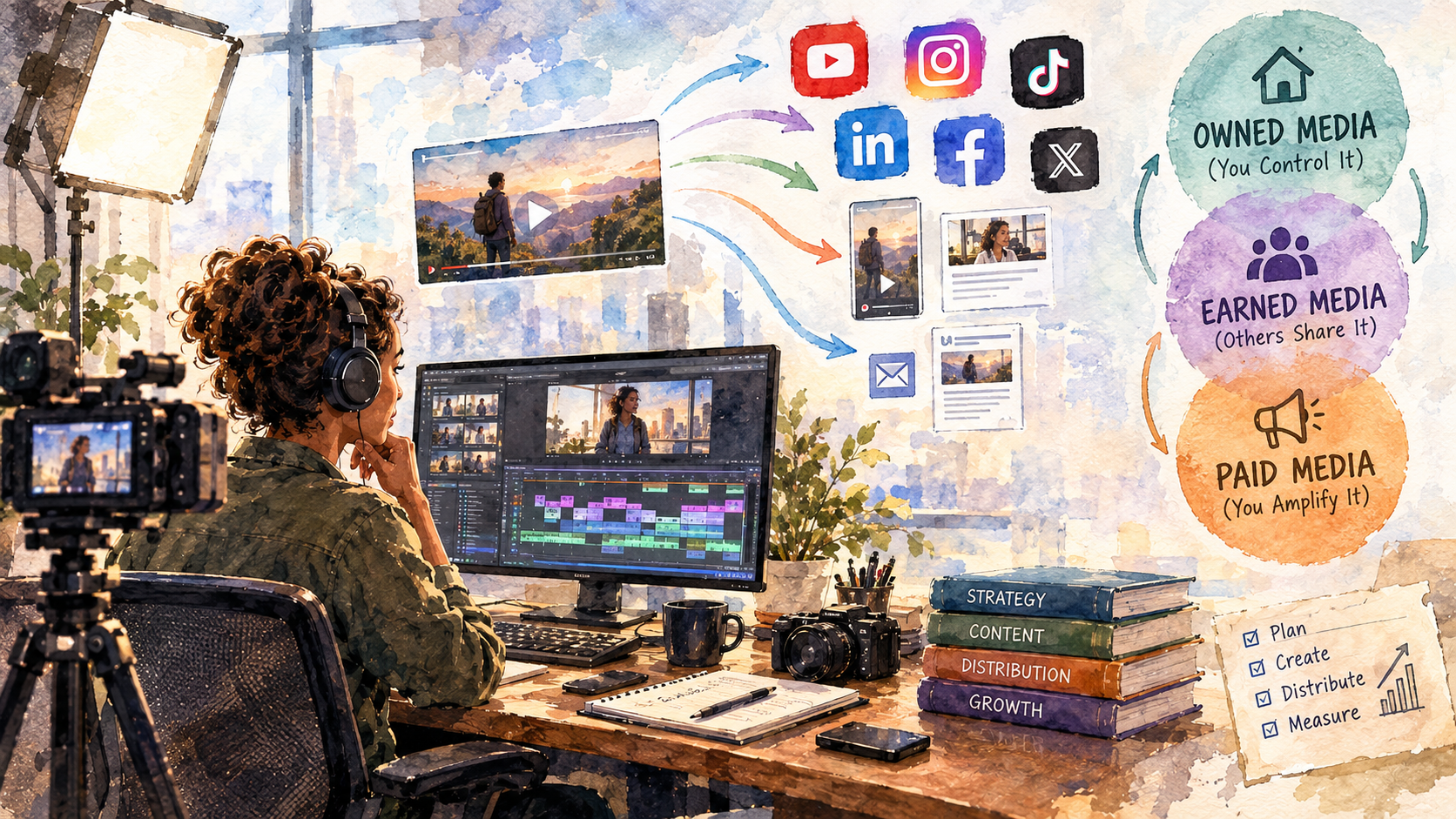
Perhaps the most significant business case for the vodcast is the efficiency of content repurposing. The modern digital landscape requires a constant stream of content across multiple platforms. A single multi-camera vodcast recording session can serve as the foundational pillar for an entire month’s worth of marketing collateral.
Through strategic media distribution, that one session can be transformed into:
- A full-length video episode for YouTube and Spotify
- A high-quality audio file for Apple Podcasts and RSS feeds
- A dozen short-form, vertical video clips tailored for TikTok, Instagram Reels, and YouTube Shorts
- Transcribed quotes for blog posts and LinkedIn articles
This “one session, many assets” methodology is a primary driver for agencies and content creators moving to video. It maximizes the return on time invested in the studio, ensuring that an hour of recording fuels a comprehensive, multi-platform media strategy.
Production Requirements: What You Actually Need to Record Both
The divide between audio and video podcasting becomes most apparent when you look at the technical requirements. Many creators hesitate to make the jump to video because they assume it requires an overwhelming amount of gear and technical knowledge. Understanding what is actually required—and how to access it—is crucial.
Audio Production Requirements
To produce a professional-sounding audio podcast, the requirements are relatively straightforward, though quality still matters immensely. You need:
- Professional Microphones: Dynamic or condenser microphones that isolate the speaker’s voice and reject background noise.
- An Audio Interface or Mixer: Hardware that translates the analog microphone signal into a high-quality digital file for your recording software.
- Acoustic Treatment: A quiet environment free of echo, hard reflections, and ambient noise (like HVAC systems or street traffic).
- Headphones: Closed-back headphones for the host and guests to monitor audio levels without sound bleeding back into the microphones.
Video Production Requirements
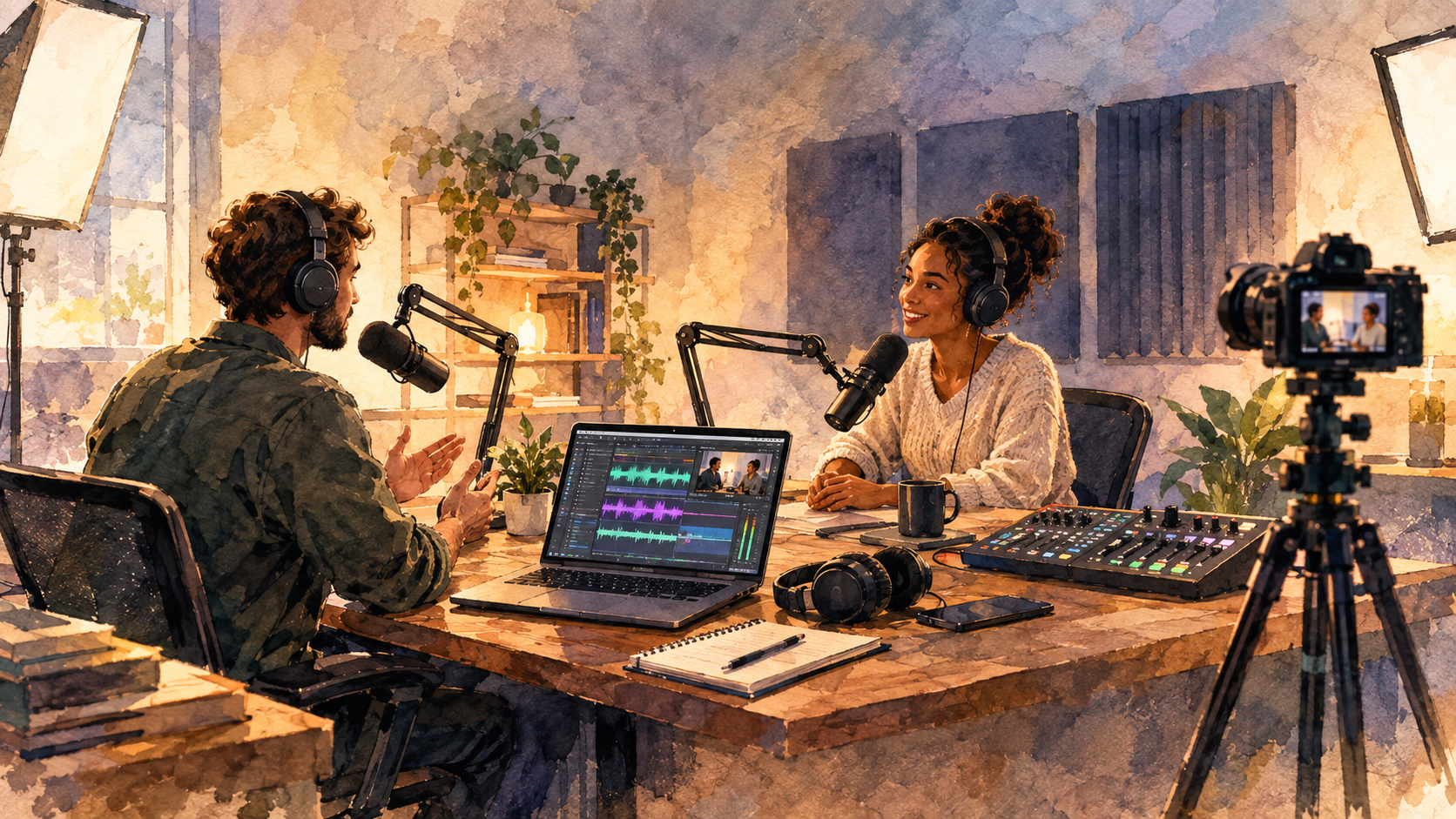
Transitioning to a vodcast multiplies the complexity. You are no longer just capturing sound; you are building a visual set. To produce a vodcast that looks credible and authoritative, you need:
- Multiple Cameras: A multi-camera setup (usually three or more cameras) is necessary to capture wide shots of the room and dedicated close-ups of the host and guest. This prevents the final product from feeling like a static, unengaging webcam call.
- Professional Lighting: Lighting is the difference between a broadcast-quality image and amateur video. You need key lights, fill lights, and practical set lighting to separate subjects from the background and ensure they look their best.
- Video Switching and Syncing: You need hardware and software to seamlessly switch between camera angles, either live during the recording or in post-production, while keeping the video perfectly synced with the high-resolution audio files.
- Set Design: The physical space must be visually appealing, on-brand, and free of clutter.
The Studio Solution
For many business owners, marketing professionals, and independent creators, purchasing, learning, and maintaining this level of video equipment is an unnecessary distraction from their core business. The practical barrier of setting up cameras, dialing in lighting, and managing multi-track audio prevents many great shows from ever launching.
This is where leveraging an established studio rental becomes the ultimate shortcut. You do not need to buy the gear or build the room. By utilizing a fully equipped, working broadcast facility like Drake Media Studios, you gain access to professional infrastructure without the overhead.
Rather than renting an empty room and bringing in freelance technicians, creators can step into the same 8,200-square-foot facility where The Donna Drake Show is produced. A professional multi-camera vodcast setup with pristine audio, pre-lit sets, and live-switching capabilities allows you to focus entirely on hosting your show. You simply walk in, have a great conversation, and walk out with broadcast-ready files.
The Hybrid Approach: Why Successful Creators Do Both
The most successful shows in the current media landscape do not choose between audio and video—they do both. By recording a high-quality vodcast, you naturally generate the high-quality audio file needed for traditional podcast platforms.
However, mastering the hybrid approach requires a specific mindset during production. Because a large portion of your audience will only be listening, the conversation must remain coherent without visual context. Hosts of hybrid shows learn to verbally describe visual moments (“For those listening, John just held up a copy of his new book…”), ensuring that the audio-only audience never feels alienated or confused.
Simultaneously, the visual elements must be compelling enough to justify watching. This is achieved through expressive body language, dynamic multi-camera editing, and a professional set design that communicates authority. When executed correctly, the hybrid approach allows you to capture the massive algorithmic discovery of video platforms while retaining the intimate, on-the-go loyalty of traditional audio listeners.
Frequently Asked Questions About Podcasts vs. Vodcasts
Navigating the transition from audio to video naturally raises practical questions. Here are the most common inquiries creators have when deciding on a format.
What’s the difference between a podcast and a vodcast? A podcast is audio-only; a vodcast (video podcast) is recorded and published as video, so your audience can watch the conversation as well as listen. It delivers the same engaging content, but in a richer, visual format.
Are video podcasts really better than audio-only? For growth and discovery, usually yes—video performs exceptionally well on YouTube and social media algorithms, and many listeners now explicitly prefer it. However, audio still wins for hands-free, on-the-go listening (like driving or working out). This is exactly why most successful shows choose to publish both.
Do I need a studio to record a video podcast? Not strictly, but a studio makes it dramatically easier. A multi-camera setup, proper lighting, and clean, treated audio are the difference between a video that looks like a high-end professional broadcast and one that looks like a standard webcam call.
What equipment do you need for a video podcast? At minimum, you need high-quality cameras for each speaker, professional microphones, adequate lighting, and a reliable way to switch or sync the footage. A vodcast-ready studio bundles all of these elements together, along with the technical staff to run them—which is why many creators choose to rent rather than buy.
Can you livestream a video podcast? Yes. With the right technical setup, you can stream live to YouTube, social platforms, or your own website while simultaneously recording high-resolution files. You can then take that recorded footage and repurpose it into shorter clips and audio episodes afterward.
How much does it cost to record a video podcast? The cost varies based on the length of your session and the complexity of your setup. However, renting a fully equipped studio by the session is usually far more cost-effective—and yields a much higher quality product—than buying the gear, building out a space, and learning to engineer it yourself. You can view our Podcast & Vodcasting services for specific booking details and capabilities.
Ready to Record Your Podcast or Vodcast on Long Island?
Deciding between an audio-only podcast and a full-scale vodcast ultimately comes down to your goals, your audience, and the resources you have at your disposal. While the industry is undeniably shifting toward visual content, the true key to success in either format is the quality of your production and the authenticity of your conversation.
You do not need to navigate the technical complexities of lighting, multi-camera switching, and audio engineering alone. Whether you are an entrepreneur recording your first audio series or an established brand ready to launch a high-end video show, The Studio provides the credible, fully staffed infrastructure you need to execute your vision seamlessly within the NYC 30-mile zone.
If you are ready to stop worrying about the equipment and start focusing on the stories you want to share, explore our Podcast & Vodcasting capabilities to book your session today.